For figurines, choose resin when detail rules — faces, fine textures, jewellery-scale features and D&D minis — and FDM/PLA when size, budget and durability matter, like large statues, terrain and pieces you handle often. At 3DCentral we pick the right process per job, and you approve a preview before we print.
What is the real difference between resin and FDM for figurines?
The two processes build a figure in fundamentally different ways, and that shapes every trade-off below. Resin printing (SLA/MSLA) cures liquid photopolymer one ultra-thin layer at a time, hardening an entire layer at once. FDM (fused deposition modelling) melts and extrudes a plastic filament such as PLA or PETG, laying down lines that stack into the model.
That difference is most visible at the surface. Resin layers land in the 0.025–0.05 mm range with roughly ±0.05 mm dimensional accuracy, so layer lines are essentially invisible and a face reads cleanly off the printer. FDM typically prints thicker layers with accuracy closer to ±0.3 mm, leaving visible lines that matter on small, detailed sculpts but disappear on larger pieces.
Note: the figures above are typical published ranges for each process, not a 3DCentral lab benchmark — your exact result depends on the model, scale and finish you choose.
Which gives better detail — resin or FDM?
Resin wins on raw detail. Because it cures whole layers of liquid rather than stacking extruded lines, it captures crisp edges, deep recesses, fabric folds, scales and facial features that FDM struggles to resolve at small scale. For collectors printing a 32 mm hero mini, a display bust, or a character face, resin is the default.
FDM has narrowed the gap on bigger sculpts. A matte PLA finish hides layer lines well, and at statue or large-figure scale the eye stops noticing them. So the honest rule is: detail-per-millimetre favours resin; detail-per-dollar at large scale favours FDM.
Which is more durable for handling and play?
This is where FDM/PLA flips the result. Standard resins are noticeably brittle: they hold exquisite detail but crack rather than flex under impact, so a dropped resin mini can snap at a thin ankle or weapon. That’s an accepted trade-off for display pieces and shelf collectibles that don’t see stress.
PLA and especially PLA+ are more forgiving — a PLA+ figure can often survive a drop to a tile floor and shrug off repeated table handling. PETG and nylon push impact resistance further still. For gaming minis that get picked up every turn, articulated art toys, or anything shipped to kids-at-heart who’ll actually play, FDM is the durable choice. Tough resins narrow the gap, but standard rigid resin stays behind on impact.
| Factor | Resin (SLA/MSLA) | FDM (PLA/PETG) |
|---|---|---|
| Fine detail & faces | Best — invisible layers | Visible lines at small scale |
| Durability / impact | Brittle, can crack | Tougher, survives handling |
| Best size range | Small minis & busts | Medium to large statues, terrain |
| Full / multi-colour | Mono, then hand-paint | Multi-filament colour zones |
| Cost per piece | Higher at small detail | Budget-friendly, scales well |
| Terrain & props | Overkill, brittle | Ideal |
What about full-colour figurines?
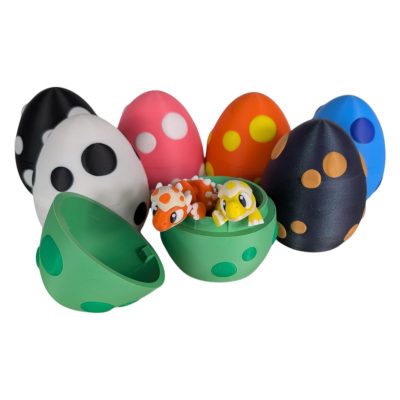
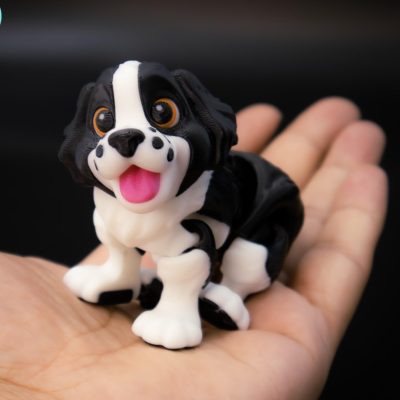
Colour is the other big fork. Resin prints come off the printer in a single colour — stunning for detail, but they expect hand-painting, which is exactly how hobbyists finish display minis. FDM offers a different path: multi-filament systems (like an AMS) can lay down up to many colour zones in one print, so you get a “ready out of the box” multi-colour figure or terrain piece without a paintbrush.
True voxel-level full-colour (binder/material jetting in CMYKW) exists but carries a high entry price and is rare outside industrial bureaus. For most collectors, the practical choice is resin + paint for showpiece detail, or multi-colour FDM for fast, paint-free, durable pieces.
How does 3DCentral choose resin or FDM per job?
We don’t force one process on every order. When you upload or generate a model, we match it to the right machine in our 200+ printer Quebec farm based on what your piece needs:
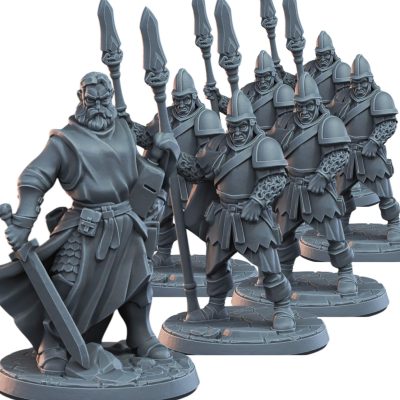
- Resin — D&D and wargaming minis, character busts, jewellery-scale detail, display collectibles and keepsakes where the face and texture carry the value.
- FDM / PLA — larger statues and cosplay props, terrain and bases, multi-colour pieces, articulated art toys, and anything that gets handled, shipped far or printed in quantity.
- Either, your call — when a sculpt sits in the middle, we show you the trade-off and you decide before we commit.
Every job goes through preview-approval: you see and approve the model before we print, so detail, scale and process are settled up front — no surprises.
Resin vs FDM cost: which is cheaper for figurines?
At small, high-detail scale, resin’s material and post-processing push cost up per piece, but you get finish that FDM can’t match. FDM is generally the budget-friendly route, and it scales better for large models, terrain runs and multi-copy orders where filament is economical and print time is the main cost. The cheapest figurine isn’t a single process — it’s the process matched to the model. For a brittle-but-gorgeous display bust, resin earns its premium; for a big statue or a tableful of terrain, FDM wins on dollars.
A note on rights: 3DCentral’s Commercial License covers original 3DCentral designs only. Our catalogue is a mix of original 3DCentral models and curated community-artist designs (Cinderwing3D, Flexi Factory, McGybeer and others). For commercial printing rights to a community artist’s or your own custom design, contact the artist directly.
Still unsure which process suits your figure? Upload your model, generate one with our AI engine, or tell us your goal, and we’ll recommend resin or FDM with a preview before we print — start your custom figurine on our on-demand 3D printing service.
Frequently asked questions
Is resin or FDM better for D&D miniatures?
Resin is usually better for D&D and wargaming miniatures because its 0.025–0.05 mm layers capture faces, weapons and fine texture that FDM can’t resolve at 28–32 mm scale. The trade-off is brittleness — resin minis can crack if dropped. If your minis get heavy table handling, durable PLA+ via FDM is a reasonable choice despite softer detail.
Are resin figurines more fragile than PLA?
Yes. Standard resins are brittle and crack rather than flex under impact, which is fine for display pieces but risky for handled minis. PLA, and especially PLA+, is tougher and often survives a drop to a hard floor. Tough resins narrow the gap, but standard rigid resin still trails PLA on impact resistance.
Can you 3D print figurines in full colour?
Yes, two ways. Multi-filament FDM (with an AMS-style system) prints multiple colour zones directly for a paint-free, durable result. Resin prints in a single colour and is then hand-painted, which is how hobbyists finish display minis. True voxel full-colour exists but is costly and rare outside industrial bureaus.
Which is cheaper for figurines, resin or FDM?
FDM is generally more budget-friendly, especially for larger models, terrain and multi-copy runs. Resin costs more per piece at small, high-detail scale but delivers a finish FDM can’t match. The cheapest result is the process matched to your model, which is why 3DCentral recommends per job.
Which process is best for large cosplay props?
FDM is the practical choice for large cosplay props and statues. It scales to big sizes economically, prints tougher pieces that survive wear and travel, and can add multi-filament colour zones. Resin is reserved for small, high-detail accents. 3DCentral matches the process to each piece and shows you a preview before printing.
Does 3DCentral choose the process for me?
We recommend resin or FDM based on your model’s detail, size, durability and colour needs, then you approve a preview before we print. Everything is made in our 200+ printer Quebec farm with CAD pricing and no customs for Canadian collectors.
Ready to start with
-
-
-
-
VALUE PACK