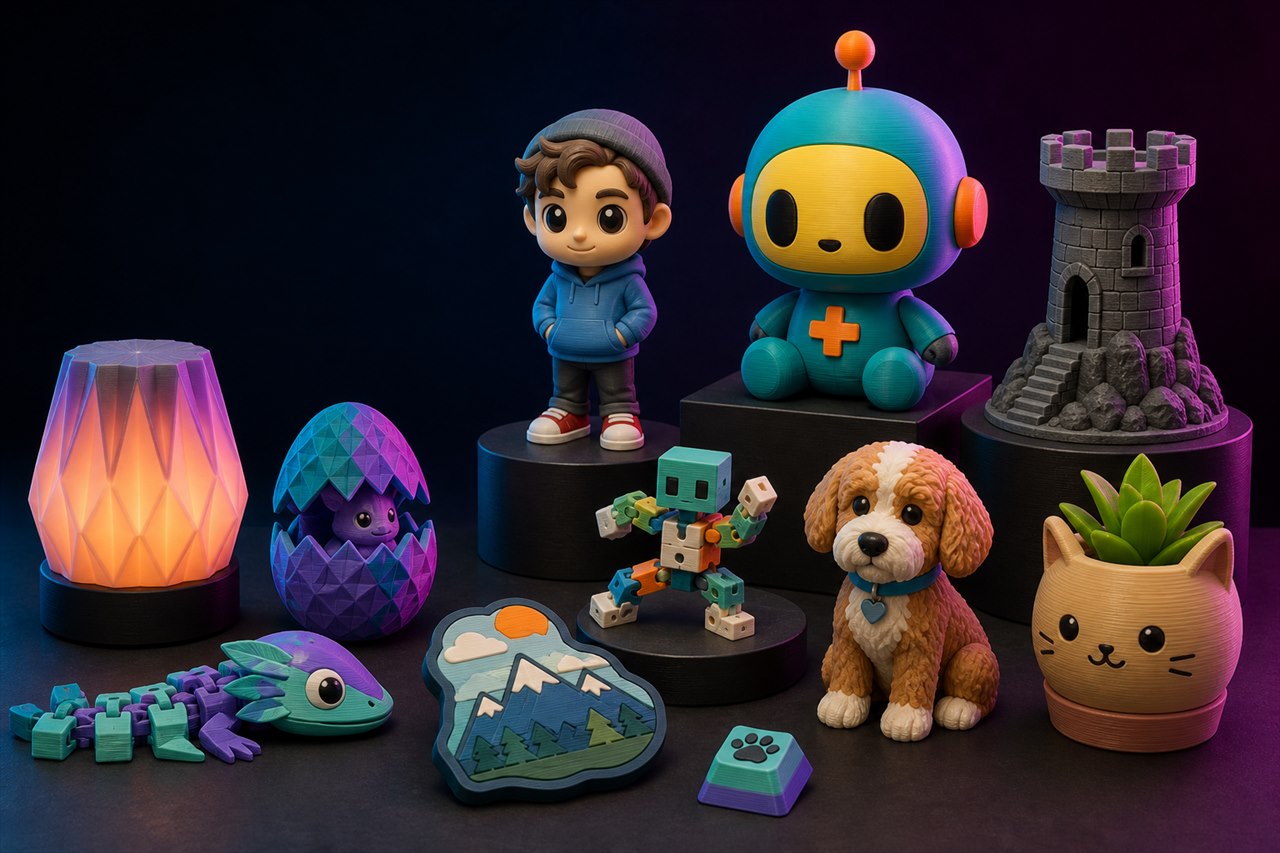
Start a custom project with the result you need and the references you are authorized to provide. Personal keepsakes and commercial merchandise require different scope decisions. Describe the intended use, quantity and dimensions so the appropriate feasibility and approval process can be discussed.
Separate a creator prototype from a merchandise run
For an independent RPG publisher, a physical character can serve as a private concept sample, a promotional display or an item for sale. State the intended use before requesting production. A prototype review does not automatically approve a commercial run.
Prepare a rights and design brief identifying the creator, any collaborators, the assets you can authorize and the intended sales channels. Explain the quantity, desired dimensions, finishing expectations and which features are essential to the character. Artwork suitable for a book may need changes to become a workable small object.
- Agree on what the first sample is meant to prove: silhouette, scale, finish or another requirement.
- Specify who approves changes and the final physical result.
- Ask for explicit confirmation of any commercial production and resale scope.
- Confirm packing, delivery and repeat-order requirements separately.
Do not use a catalogue license as authorization for creator-owned custom merchandise. Submit the concept for feasibility review, clearly stating whether the request is a prototype, own-use display or intended resale. Production commitments require an approved project scope.
Prepare an original-character figurine request
Describe the character in terms that can become a physical object: pose, important features, approximate dimensions and intended display location. Include reference images you are entitled to provide, and identify which details matter most if a small feature needs simplification.
A useful request includes
- The character's front, side and back views where available.
- Desired height and the space available for its base and accessories.
- Colour or finish preferences, described as preferences rather than assumed options.
- Quantity, intended personal use and any target date.
- Confirmation of your permission to use the artwork or likeness.
For accepted custom projects, the concept, scope, quote, timing and included revisions are confirmed before payment. For a printed project, final model approval comes before printing. Approval of a digital model is not a promise that every tiny detail will look identical in the chosen physical process.
If the figures are intended for merchandise sales, say so at the start: a personal keepsake request does not establish a commercial production agreement. Submit your character idea for feasibility review.
Scope a production run of your original figurine
An artist's production request needs more than an image and a quantity. Explain whether you need a prototype, personal display pieces or merchandise intended for sale. The permitted use and accepted manufacturing scope must be clear before a batch is agreed.
Prepare the production brief
- Identify the artwork or model and your authority to use it.
- Describe the finished size, appearance and features that matter most.
- State the intended quantity, sales channels and target date.
- Specify what a sample must demonstrate before batch approval.
- Ask how revisions, approved files and changes after approval will be recorded.
A personal-keepsake agreement does not establish permission or an arrangement to manufacture merchandise for resale. Ask for explicit confirmation of the commercial production scope, responsibilities and physical resale use. Ownership of an image also does not necessarily establish rights to every character or likeness it contains.
Treat the sample as a decision point, not proof that a larger run has already been accepted. Request a scoped project review, or start with an authorized model file if the design is already prepared.