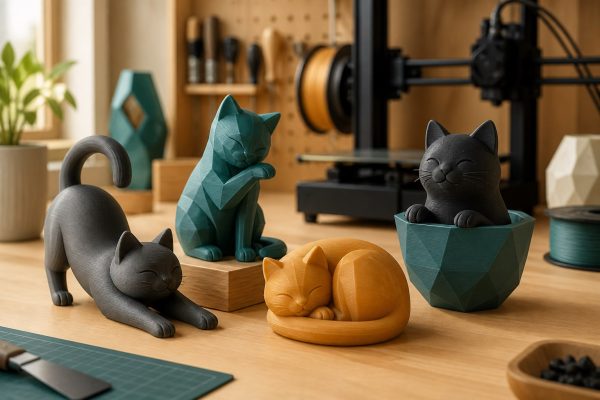
Plant parents invest deeply in their green spaces. They track watering schedules, research soil compositions, and curate their collections with genuine passion. Generic mass-produced pots and garden-center accessories do not match that level of dedication. 3D printed planters and accessories offer something fundamentally different: designs impossible to achieve through traditional ceramics or injection molding, personalized aesthetics that reflect individual style, and functional innovations that actually improve plant care.
The additive manufacturing process behind 3D printing allows for geometries that conventional pottery kilns cannot produce. Voronoi patterns with mathematically distributed openings, interlocking lattice structures, parametric spirals that follow natural growth curves. These designs do not just hold plants; they frame them as living art installations. At 3DCentral, our Laval, Quebec print farm produces each piece on our fleet of over 200 printers, ensuring consistent wall thickness, proper drainage geometry, and reliable structural integrity.
Geometric Planters: Where Mathematics Meets Botany
Geometric planters have become the signature aesthetic of the 3D printed plant accessories category, and for good reason. Hexagonal, octagonal, and faceted designs introduce architectural rigor to plant displays, creating a dialogue between the organic irregularity of living plants and the mathematical precision of their containers.
Faceted designs with sharp, angular planes catch light differently throughout the day, creating subtle shadow play that changes a plant’s presentation from morning to evening. Low-poly style planters reduce organic forms to their geometric essence, producing a modern minimalist look that works equally well on a mid-century console table or a contemporary floating shelf.
Modular hexagonal systems allow plant parents to build expandable wall displays. Individual hex cells connect together, enabling arrangements that grow alongside the collection. Starting with three succulents and eventually expanding to a full living wall becomes a gradual project rather than a major commitment. The standardized geometry ensures every addition integrates seamlessly.
Size ranges from tiny succulent holders that fit on a windowsill to medium plant pots suitable for trailing pothos or compact ferns. Each design includes proper drainage considerations: integrated drain holes with matching saucers prevent water damage to furniture while maintaining healthy root environments.
Self-Watering Designs: Engineering for Plant Health
Among the most practical innovations in 3D printed plant accessories are self-watering planter systems. These clever two-piece designs address the most common plant care failure: inconsistent watering. The engineering is elegant in its simplicity. An inner pot holds the plant and soil, suspended above a lower reservoir. A wick or permeable base allows moisture to travel upward through capillary action, keeping soil consistently moist without waterlogging.
For plant parents who travel frequently or simply struggle with watering schedules, self-watering planters transform plant care from a daily obligation into a weekly reservoir refill. Some designs include visible water level indicators, either through transparent reservoir sections or floating gauge mechanisms, so the owner knows exactly when to add water without disturbing the plant.
The beauty of 3D printed self-watering systems over commercial alternatives is customization. Reservoir capacity can be matched to specific plant species’ water needs. Wick diameter controls moisture delivery rate. Drainage geometry can be optimized for different soil types. These are not one-size-fits-all solutions; they are precision instruments for plant care.
Animal and Character Pot Covers
This is where function meets personality, and where 3D printed plant accessories truly differentiate from anything available at a garden center. Character pot covers transform ordinary nursery pots into displays of personality and humor.
Gnome pot covers from the gnomes collection turn a standard four-inch pot into a gnome whose hat is a living plant. The visual effect is immediate and delightful: a wise little figure with a lush green crown of ferns or a flowering succulent growing from his cap. Different gnome characters carry different expressions and poses, allowing plant parents to match personalities to plant species.
Duck planters from the ducks collection follow a similar concept with different character energy. A rubber duck whose back opens to reveal a planting cavity brings playful charm to kitchen windowsills and bathroom shelves. The whimsy of the design contrasts with the living element of the plant, creating something genuinely smile-inducing.
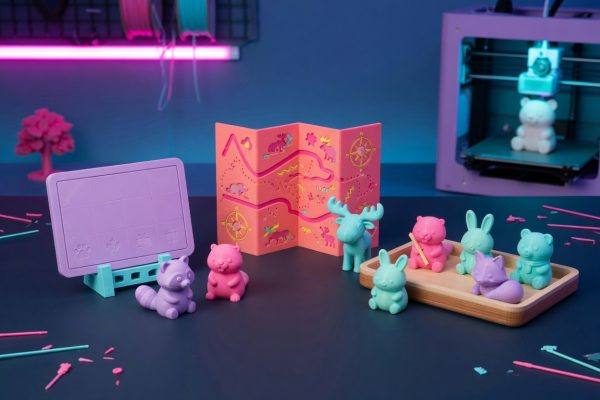
Animal-shaped pot holders expand the character range further. Cat figures cradling pots, elephant designs with trunk-shaped drainage, and woodland creature scenes where the plant integrates into a miniature landscape. Each design considers the practical requirements of plant care while delivering the character and individuality that plant parents value.
Garden Accessories Beyond Planters
Plant parents need more than pots. The ecosystem of 3D printed garden accessories addresses dozens of small needs that commercial products often overlook or handle with generic, uninspired solutions.
Plant labels and markers bring both organization and style to collections. Botanical-style markers with species names, care instruction tags that hang from pot rims, and decorative stakes with character toppers turn identification from a utility into a design element. For plant parents who propagate and trade specimens, well-labeled collections show serious dedication.
Soil moisture indicator holders provide structure for simple moisture probe systems. Rather than jamming a bare sensor into soil, a printed holder positions the probe correctly and adds a decorative element. Some designs integrate with self-watering systems, providing visual feedback on reservoir levels.
Hanging planter brackets in decorative designs enable vertical garden arrangements without the industrial aesthetic of hardware-store hooks. Wall-mounted brackets with organic curves, geometric angles, or character motifs extend planting space while contributing to room design. Macrame-inspired holders printed in flexible TPU material offer the woven look without the maintenance.
Trellis clips and plant support structures keep climbing and trailing plants organized as they grow. Customized to specific vine thicknesses and growth patterns, these small accessories solve real problems that generic twist ties and bamboo stakes address poorly.
Material Selection: Matching Print Material to Plant Needs
Understanding materials is essential when selecting 3D printed planters and accessories, and it makes the difference between a gift that lasts years and one that deteriorates in months.
PLA (polylactic acid) is the most common printing material and works excellently for indoor pot covers, decorative planters that use a separate waterproof liner, and dry-display applications. PLA holds crisp detail, accepts post-processing well, and comes in a wide range of colors. Its limitation is moisture sensitivity over extended periods, making it less suitable for planters that hold wet soil directly against printed walls.
PETG (polyethylene terephthalate glycol) is the recommended material for any planter that contacts water or sits outdoors. PETG offers excellent water resistance, UV stability, and temperature tolerance across Canadian seasons. Garden accessories printed in PETG from 3DCentral handle rain, sun exposure, and freeze-thaw cycles without degradation.
At 3DCentral, every planter product specifies its material and intended use, removing guesswork from the selection process. Indoor decorative pieces use PLA for maximum detail. Functional planters with water contact use PETG for longevity. This transparency helps gift buyers choose appropriately for the recipient’s intended application.
Gifting Strategy for Plant Parents
The best plant parent gifts combine thoughtful design with practical awareness of the recipient’s collection. Consider their primary plant types: a succulent collector benefits from different accessories than a tropical houseplant enthusiast. Window gardeners have different needs than those with outdoor garden beds.
A curated gift set combining a geometric planter, matching saucer, and character plant marker creates a cohesive package that feels intentional. Pairing a 3D printed planter with a live plant in it transforms the gift from an accessory into a complete display piece ready for immediate enjoyment.
For the plant parent who already has everything, a Mystery Box subscription delivers monthly surprises that could include garden accessories, decorative figurines for garden displays, and seasonal outdoor pieces. The recurring nature of the subscription mirrors the ongoing relationship plant parents have with their collections.
All 3DCentral products are Made in Canada, printed at our Laval, Quebec facility. For print farm operators interested in producing plant accessories for their own customers, the Commercial License provides access to production-tested designs optimized for reliable printing and strong customer reception.
Frequently Asked Questions
Q: Are 3D printed planters safe for plants and food-safe for herb gardens? A: 3D printed planters in PLA and PETG are safe for plants. For herb gardens where edible plants will be harvested, we recommend using a food-safe liner inside the printed planter or selecting planters designed as pot covers that hold a separate nursery pot. The printed material itself does not leach harmful substances into soil, but a liner provides an extra layer of assurance for edible applications.
Q: Can 3D printed planters survive outdoors through Canadian winters? A: PETG planters are designed for year-round outdoor use and handle freeze-thaw cycles, UV exposure, and rain without degradation. PLA planters are best suited for indoor use or covered outdoor areas, as prolonged moisture and temperature extremes can cause warping. Always check the product material listing before placing a planter outdoors.
Q: What size plants fit in 3D printed planters from 3DCentral? A: Planter sizes range from small succulent holders that accommodate two-inch nursery pots to medium planters suitable for four-to-six-inch pots. Each product listing includes interior dimensions and the recommended nursery pot size. Character pot covers are specifically designed to fit standard nursery pot diameters for easy plant swapping and repotting.