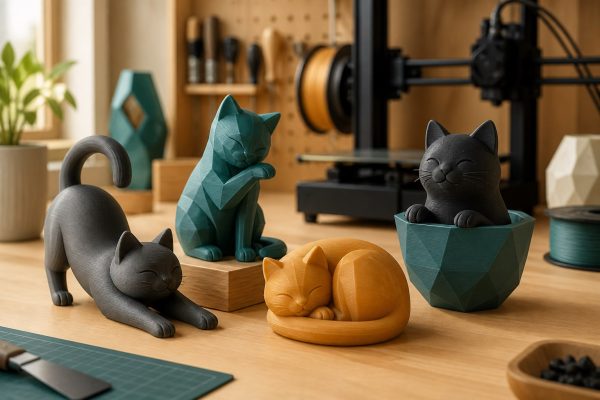
Budget constraints should limit spending, not quality. The persistent misconception that affordable gifts must look affordable ignores an entire category of products where production economics and visual impact operate independently. 3D printed collectibles under $20 consistently surprise recipients who assume — based on the detail work, material quality, and design sophistication — that the gift cost significantly more than it did.
Why 3D Printing Economics Enable Premium Looks at Low Prices
Understanding why 3D printed collectibles can look expensive while remaining affordable requires a brief look at how the economics differ from traditional manufacturing.
Traditional manufacturing scales through tooling investment. Creating a mold for an injection-molded figurine costs thousands of dollars, and that cost must be amortized across massive production runs. Complex designs require complex molds, which are more expensive, which pushes retail prices higher. Simple designs are cheaper to produce but look simple.
3D printing inverts this relationship. Design complexity does not significantly increase production cost. A highly detailed dragon with intricate scales, articulated joints, and fine accessories costs roughly the same to print as a simple geometric shape of the same volume. The production cost is driven by material usage and print time, not design complexity. This means a $15 3D printed figurine can feature design sophistication that would require $50+ retail pricing in traditionally manufactured goods.
At 3DCentral, our facility in Laval, Quebec runs over 200 printers optimized for efficient production. This scale allows us to offer detailed collectibles at price points that consistently surprise recipients with their apparent value.
Articulated Mini Dragons: Maximum Impact, Minimum Price
Small-scale articulated dragons represent perhaps the strongest value proposition in the under-$20 category. These print-in-place designs from community artists like Flexi Factory and Cinderwing3D pack sophisticated engineering into compact forms.
What Makes Them Look Expensive
At 10 to 15 centimeters in length, mini dragons feature the same joint engineering as their larger counterparts. The articulated body segments flex and pose smoothly. Detailed scale textures cover every surface. Wing membranes, horns, and tail flourishes add visual complexity. When printed in silk PLA — crystal, rose gold, or emerald — the metallic shimmer creates an unmistakable premium aesthetic.
Recipients unfamiliar with 3D printing economics consistently overestimate the cost of these pieces. The combination of mechanical function (it moves), visual detail (look at those scales), and material quality (that shimmer) triggers a price perception well above the actual retail point. This perception gap is exactly what makes articulated dragons the ideal gift for budget-conscious givers who refuse to give budget-looking gifts.
Display and Gifting Strategies
Present the dragon in a small clear box or on a piece of dark fabric to emphasize the detail work. The contrast between a translucent crystal dragon and a dark background creates a dramatic presentation that rivals jewelry unboxing. A brief note explaining the print-in-place engineering — that the joints were printed already assembled, no assembly required — adds a talking point that reinforces the perceived value.
Character Gnomes: Personality at Every Price Point
Individual gnome figurines in themed poses deliver surprising personality for their price. The reading gnome with tiny spectacles and a miniature book, the coffee gnome clutching an oversized mug, the gardening gnome with a trowel and potted plant — each design tells a micro-story through carefully detailed accessories and expressive poses.
Why Detail Drives Value Perception
The human eye evaluates craftsmanship through detail. When a gift recipient examines a gnome figurine and notices individual fingers wrapped around a tiny coffee mug handle, a textured beard with visible strands, and a carefully shaped pointed hat with a slight bend, they unconsciously assign value based on the apparent effort required to create those details. In 3D printing, that detail comes from the digital design rather than from manual craftsmanship, but the perceptual impact is identical.
At 3DCentral, gnome designs from community artists feature detail levels that compare favorably with hand-painted figurines retailing at three to five times the price. The detail is designed once and reproduced precisely on every print, creating a consistency that handcrafted alternatives cannot match.
Themed Duck Sets: The Affordable Gift That Feels Generous
A set of three mini themed ducks in a coordinated color palette creates a gift presentation that reads as more generous than a single piece at the same total price. The set format triggers a different value perception than individual items — three objects arranged together feel like a curated collection rather than a single purchase.
Color Coordination as a Value Multiplier
Select three ducks in a coordinated color scheme — warm earth tones, ocean blues, or sunset gradients — and the set immediately reads as intentionally curated rather than randomly assembled. This perceived intentionality increases the gift’s emotional value without increasing its cost. The recipient sees not just three ducks but a deliberate design statement.
Occasion-Specific Set Building
Build sets themed to the occasion. Three holiday-themed ducks for a Christmas stocking. Three profession-themed ducks for a coworker’s work anniversary. Three color-matched ducks for a home decor enthusiast’s shelf. The thematic coherence transforms individual items into a cohesive gift concept.
Geometric Planters and Functional Art
Modern geometric planters with hexagonal patterns, wave textures, or crystal-faceted surfaces occupy the intersection of decorative art and functional object. Combined with an inexpensive small succulent, these pieces create a complete gift under $20 that combines the living element of a plant gift with the permanence of a design object.
The Complete Gift Advantage
A planter with a plant inside it is a finished gift — no additional purchases required, no assembly necessary, no “some assembly required” asterisk. The recipient receives something immediately displayable that requires only occasional watering to maintain. This completeness adds perceived value because the gift-giver has done all the work, including sourcing the complementary elements.
Seasonal Ornaments and Decorative Pieces
Seasonal items — holiday ornaments, garden stakes, patio decorations — naturally fall under $20 while maintaining strong gift appeal. Their time-limited relevance creates urgency (perfect for this season) while their decorative function ensures display rather than storage.
Year-Round Seasonal Gifting
The seasonal approach is not limited to December. Spring garden gnome stakes, summer patio ornaments, fall harvest figurines, and winter holiday decorations create gifting opportunities throughout the year. Each seasonal piece under $20 serves as a thoughtful, occasion-appropriate gift that does not strain any budget.
Browse all price ranges in the shop, or explore the figurines collection for premium designs that also fall within accessible price ranges. For ongoing gift value, the Mystery Box subscription delivers curated monthly surprises.
Frequently Asked Questions
Q: What 3D printed gifts under $20 get the best reactions from recipients? A: Articulated mini dragons in silk PLA consistently generate the strongest reactions due to their combination of mechanical function, visual detail, and metallic shimmer. Character gnomes with themed accessories are a close second, particularly for recipients who appreciate personality-driven designs.
Q: How can I make an under-$20 3D printed gift look like a premium present? A: Presentation makes the difference. Place the piece in a small clear display box or on a dark fabric backdrop. Include a brief card noting that it was printed in Quebec, Canada, and describe the specific design details. Silk PLA color choices like rose gold or emerald add perceived value through their metallic finish.
Q: Are 3D printed gifts under $20 good quality or do they feel cheap? A: All 3DCentral collectibles are printed with premium PLA filament on production-grade equipment at our Quebec facility, regardless of price point. The detail level, material quality, and finish are consistent across the catalog. Price differences between items reflect size and print time, not quality — a $15 mini dragon receives the same production standards as a $50 large figurine.