PLA and ABS are the two foundational materials of desktop 3D printing. They were among the first filaments available when consumer FDM printers emerged, and they remain the most frequently discussed comparison in the 3D printing world. Despite both being thermoplastics processed through the same printing technology, their properties, printing requirements, and ideal applications could not be more different.
Understanding the real-world differences between PLA and ABS helps you choose the right material for your projects and explains why professional collectible producers like 3DCentral make specific material choices for their product lines.
Material Origins and Composition
PLA (Polylactic Acid)
PLA is derived from renewable plant resources, primarily corn starch or sugarcane. The manufacturing process ferments plant sugars into lactic acid, which is then polymerized into polylactic acid pellets. These pellets are extruded into the filament spools used in 3D printers. PLA’s plant-based origin gives it a significantly lower carbon footprint than petroleum-based plastics and makes it industrially compostable, though it does not decompose readily in home composting environments.
ABS (Acrylonitrile Butadiene Styrene)
ABS is a petroleum-based terpolymer combining three monomers: acrylonitrile provides chemical resistance and heat stability, butadiene provides toughness and impact resistance, and styrene provides rigidity and a smooth surface finish. ABS has been a staple of manufacturing for decades, used in everything from LEGO bricks to automotive components and appliance housings.
Printing Characteristics Compared
Ease of Printing
PLA is significantly easier to print than ABS. PLA prints at lower temperatures (190-220 degrees Celsius nozzle, 50-60 degrees Celsius bed), adheres to most bed surfaces without specialized preparation, warps minimally, and does not require an enclosed printer. Beginners can achieve good results with PLA on virtually any printer with default settings.
ABS demands more from your printer and environment. It requires 230-260 degrees Celsius nozzle temperature, 90-110 degrees Celsius bed temperature, and an enclosed print chamber to prevent warping. Without an enclosure, ABS prints larger than a few centimeters will almost certainly warp, crack, or detach from the bed. The bed surface typically needs ABS slurry (ABS dissolved in acetone) or specialized adhesion sheets for reliable first-layer adhesion.
Warping and Dimensional Accuracy
ABS contracts significantly as it cools, approximately 0.7-0.8% shrinkage compared to PLA’s 0.3-0.4%. This higher shrinkage rate causes warping on large prints and can affect dimensional accuracy. For figurines and collectibles where visual detail and proportions matter, PLA’s lower shrinkage produces more accurate results.
Detail Resolution
PLA’s lower printing temperature and more predictable flow behavior produce sharper details, cleaner overhangs, and better bridging performance. Fine features like facial details on figurines, delicate wings, thin swords, and intricate surface textures resolve more clearly in PLA. ABS can achieve good detail but requires more careful tuning and tends to produce slightly softer edges due to the higher printing temperatures and slower cooling.
Mechanical Properties
Strength and Rigidity
PLA is stiffer than ABS, with a higher tensile modulus (approximately 3.5 GPa vs. 2.3 GPa). This means PLA objects resist bending forces better. However, PLA is more brittle. When PLA reaches its stress limit, it tends to crack or snap rather than flex. ABS has lower overall rigidity but much better impact resistance. ABS objects can absorb impacts, flex, and return to shape where PLA would fracture.
For decorative figurines displayed on shelves, PLA’s higher stiffness is advantageous. The pieces hold their shape precisely and feel solid. For items that might be dropped or subjected to rough handling, ABS’s impact resistance would be preferable, though PETG is generally a better alternative than ABS for this purpose.
Heat Resistance
This is ABS’s clearest advantage. ABS maintains its structural integrity up to approximately 105 degrees Celsius, while PLA begins softening at just 55-60 degrees Celsius. A PLA figurine left in a hot car or placed near a heat vent can visibly deform. ABS would survive these conditions without issue.
For indoor display collectibles in climate-controlled environments, PLA’s heat sensitivity is rarely a practical concern. For outdoor displays, car dashboard ornaments, or items near heat sources, ABS or PETG is the better choice. At 3DCentral, we specify material on every product listing so collectors can choose appropriately for their display environment.
Chemical Resistance
ABS resists a wider range of chemicals than PLA, including many solvents, oils, and cleaning products. PLA can be damaged by strong cleaning agents and certain solvents. For collectibles that are dusted and occasionally wiped clean, this difference is negligible. For functional items exposed to chemicals, ABS has the advantage.
Safety and Health Considerations
Printing Fumes
This is where PLA has a decisive safety advantage. PLA emits minimal volatile organic compounds (VOCs) during printing and is generally considered safe to print without dedicated ventilation (though good ventilation is always recommended). The fumes are largely composed of lactide, which is not classified as hazardous.
ABS emits styrene during printing. Styrene is classified by the IARC as a possible carcinogen (Group 2B). Prolonged exposure to styrene fumes can cause headaches, fatigue, and respiratory irritation. ABS should only be printed with adequate ventilation, ideally in an enclosed printer with a HEPA and activated carbon filtration system. Never print ABS in a bedroom, living space, or any unventilated area.
Handling Safety
Both materials are safe to handle as finished objects at room temperature. Neither leaches harmful chemicals through skin contact. As discussed in our safety guide, neither material is recommended for direct food contact in 3D printed form due to bacterial harboring in layer lines.
Post-Processing Options
ABS Acetone Smoothing
ABS dissolves in acetone, which enables a unique post-processing technique. Exposing an ABS print to acetone vapor smooths the surface, melting away layer lines and creating a glossy, injection-molded appearance. This is a significant aesthetic advantage for ABS and one of the main reasons some creators prefer it despite the printing challenges.
PLA Post-Processing
PLA does not respond to acetone smoothing. Achieving a smooth surface requires mechanical methods: sanding through progressively finer grits, applying filler primer, and painting. While more labor-intensive than acetone smoothing, these methods give the artist full control over the final appearance and are the standard approach used by professional figurine painters and collectible finishers.
Why 3DCentral Uses PLA for Collectible Production
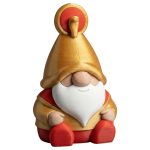
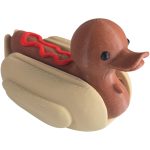
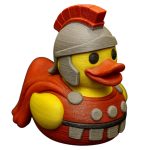
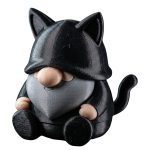
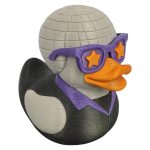
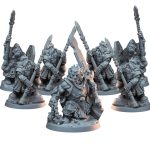
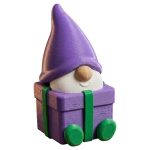
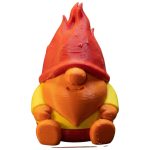
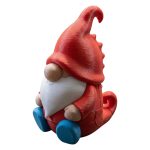
At 3DCentral, PLA constitutes approximately 90% of our collectible production. The decision is based on multiple converging factors. PLA’s superior detail reproduction captures the intricate work of community artists like Cinderwing3D, McGybeer, and Flexi Factory. The material’s safety profile means our production team of 200+ printers can operate without industrial ventilation systems. PLA’s wide color availability, including silk, metallic, and matte finishes, gives our gnomes, ducks, and figurines the vibrant, eye-catching appearance collectors expect.
When durability is specifically needed, we use PETG rather than ABS. PETG offers better impact and heat resistance than PLA without the toxic fumes and printing difficulty of ABS. It represents the practical middle ground for production environments.
For print farm operators considering which material to standardize on, our Commercial License provides access to models and print profiles optimized for PLA production, the most accessible and forgiving path to consistent commercial output.
Frequently Asked Questions
Q: If PLA is weaker than ABS, will my PLA figurines break easily? A: For decorative figurines displayed on shelves or in cases, PLA provides more than adequate strength. PLA’s brittleness only becomes a concern with significant impact, like dropping a figurine onto a hard floor. Even then, PLA pieces tend to break cleanly and can often be repaired with super glue. For normal handling, display, and occasional repositioning, PLA figurines are durable and long-lasting.
Q: Can I print ABS on a basic open-frame 3D printer? A: Technically yes, but results will be poor for anything beyond very small objects. Without an enclosure, ABS prints are highly susceptible to warping, cracking, and layer delamination due to uneven cooling. If you want to print ABS, invest in a printer with an enclosed build chamber and a heated bed capable of reaching 110 degrees Celsius. For most hobbyist and collectible applications, PLA or PETG on an open-frame printer produces better results with far less difficulty.
Q: Is PETG a better alternative to both PLA and ABS? A: PETG occupies a practical middle ground. It is easier to print than ABS (no enclosure required, lower fume concerns), more heat-resistant than PLA (glass transition around 80 degrees Celsius versus 55-60), and has better impact resistance than PLA. The tradeoffs are that PETG does not hold fine detail quite as well as PLA and tends to produce more stringing. For production environments, PLA remains preferred for detailed figurines and decorative pieces, while PETG is reserved for items requiring enhanced durability.