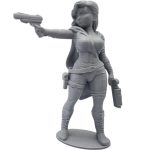
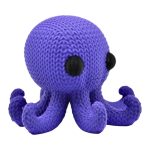
Our facility in Laval, Quebec houses over 200 industrial 3D printers running around the clock. This is not a garage workshop or a hobbyist operation. This is a production-grade manufacturing floor purpose-built for one thing: turning digital designs into physical collectibles that meet the standards collectors expect.
The 3DCentral catalog now exceeds 4,300 published products, spanning articulated ducks, fantasy figurines, decorative gnomes, seasonal ornaments, and more. Every single item ships from this one facility. No overseas outsourcing. No third-party fulfillment warehouses. Every collectible bearing the 3DCentral name was printed, inspected, and packed by our team right here in Quebec.
Here is exactly how we do it.
The Infrastructure Behind 200+ Printers
Running a facility at this scale starts with the right hardware. Our fleet consists of over 200 carefully calibrated FDM (Fused Deposition Modeling) printers, each optimized for specific types of models. Large-format machines handle oversized display pieces and multi-part builds, while precision equipment manages detailed figurines requiring fine layer heights down to 0.12mm.
Every printer on our floor is networked. Real-time monitoring software tracks each active job, reporting temperatures, print progress, and error states to a central dashboard. When a printer flags a thermal runaway, a clogged nozzle, or a layer shift, the system alerts the responsible technician immediately. This level of visibility is what makes it possible to keep 200 machines productive simultaneously rather than spending the day chasing failures.
Environmental Control
Environmental stability might be the most underestimated factor in large-scale 3D printing. PLA filament is sensitive to ambient temperature fluctuations and humidity. During Quebec winters, exterior humidity can drop below 15%, which causes filament to become brittle and produce poor layer adhesion. In summer, high humidity leads to moisture absorption, resulting in stringing and surface blemishes.
Our facility maintains stable environmental conditions year-round using dedicated HVAC systems. Temperature is held between 22-25 degrees Celsius, and relative humidity stays within a 40-55% range. These are not suggestions printed on a filament spool label. They are controlled conditions validated through months of production data showing measurably lower defect rates within these ranges.
We also run sealed filament storage with silica desiccant for hygroscopic materials like PETG. Every spool entering the production floor has been stored under controlled conditions from the moment it arrives at our facility.
Production Workflow: From Order to Print Bed
When you place an order on 3dcentral.ca, it enters our production queue within minutes. A scheduling system evaluates each job based on several factors:
- Model requirements — layer height, nozzle diameter, print speed profile
- Material and color — matching the order to printers already loaded with the correct filament
- Printer availability — routing to the next available machine in the appropriate class
- Order priority — standard orders versus rush production
This automated routing means most orders begin printing within hours of placement, not days. Batching similar jobs together is a critical efficiency strategy. If twenty customers order the same articulated duck in the same color, those jobs run as a batch on multiple machines simultaneously, dramatically reducing per-unit production time.
Print Profiles and Consistency
Every printer in our fleet runs the same validated profile for each model. A print profile defines hundreds of parameters: layer height, print speed, retraction distance, temperature curves, cooling fan behavior, infill density, wall count, and support structures. We do not leave these settings to individual operator judgment.
When our design team or one of our partner artists finalizes a new model, the production team develops and validates a print profile through a minimum of five test prints across different machines. Only after the profile produces consistent results on multiple printers does it enter the production library. This ensures that the hundredth print is identical to the first, regardless of which printer produced it.
Post-Processing and Quality Control
Printing is only half the job. Every piece that comes off a printer enters our post-processing and inspection pipeline before it can ship.
Support Removal
Many collectible designs require support structures during printing. These are sacrificial material that holds up overhangs, bridges, and complex geometries during the build process. Our post-processing team removes supports using custom fixtures that hold pieces at the correct angle, preventing accidental damage to delicate features. Articulated models from artists like Flexi Factory and Cinderwing3D require particular care, as their moving joints must remain free and smooth after support removal.
Three-Stage Quality Inspection
Every piece passes through a quality inspection checkpoint. This is not a cursory glance. Our trained inspectors evaluate each item against specific criteria:
- Visual inspection — checking for layer shifts, stringing, warping, blobs, and color inconsistencies
- Dimensional verification — random sampling with digital calipers to confirm prints match design specifications
- Functional testing — articulated pieces are fully exercised through their range of motion. Display pieces are checked for stable placement on flat surfaces. Multi-part sets like our mystery box items are assembled to confirm proper fit.
Non-compliant pieces are rejected, logged for root cause analysis, and recycled. We do not ship items that fail inspection. Our current first-pass quality rate exceeds 97%, a number we track weekly and work to improve continuously.
Packaging That Protects
Collectibles are fragile. A perfect print that arrives broken is a failure. Our logistics team developed standardized packaging templates designed to protect each piece during transit.
Small figurines receive tissue-wrapped cushioning inside fitted boxes. Larger display pieces use molded inserts or custom-cut foam. Articulated models are positioned to prevent stress on joints during shipping. Every package is sized to prevent excessive movement without excessive padding waste.
We ship from Quebec via Canada Post and courier services. Canadian orders typically arrive in 2-5 business days. US orders take 5-10 business days. Tracking information is emailed within hours of shipment.
The Team Behind the Printers
Behind every printer, every inspection station, and every shipping label is our team. Designers develop original models and collaborate with community artists. Technicians manage the fleet, running daily calibrations, replacing wear components, and troubleshooting mechanical issues before they cause production delays. Logistics specialists handle packaging, inventory, and shipping coordination.
Our Artist Partners
The 3DCentral catalog is a mix of original in-house designs and curated models from top community artists. We are proud to feature work from creators including:
- Flexi Factory — articulated print-in-place designs
- Cinderwing3D — detailed dragon and fantasy creatures
- McGybeer — character figurines and display models
- Zou3D — animal figurines and miniatures
- Arbiter — articulated figures and mechanical designs
- Twisty Prints — unique twist-action models
- Gob3D — creative character collectibles
These artists bring their own creative vision, and we bring the manufacturing expertise to produce their designs at scale with consistent quality.
For Print Farm Operators: The Commercial License
If you run your own print farm or sell 3D prints on Etsy, Shopify, or at local markets, our Commercial License gives you unlimited rights to print and sell every model in our library. Instead of spending weeks designing and prototyping new products, you get access to proven, market-tested designs that customers already want.
The subscription includes access to our private STL library with production-ready files. You can scale your own operation using the same designs we have validated through thousands of production runs.
What Comes Next
We never stop improving. New printer models are evaluated quarterly. Workflow automation reduces manual touchpoints every month. An upcoming Quebec-made filament line will give us tighter control over material quality from raw pellet to finished spool.
We are also developing AwesomePrinter, a print farm management platform designed to help other operators scale their production with the same discipline and visibility we built for ourselves.
The future of manufacturing is local, sustainable, and agile. We are building it one print at a time.
Frequently Asked Questions
How many 3D printers does 3DCentral operate?
3DCentral operates over 200 industrial 3D printers at our facility in Laval, Quebec. Our fleet includes both large-format machines for oversized builds and precision printers optimized for detailed figurines, all running around the clock to meet production demand.
What material does 3DCentral use for printing?
We primarily use premium PLA filament, a plant-based bioplastic that produces excellent detail, vibrant colors, and a smooth surface finish. For items requiring extra durability or outdoor use, we use PETG. Both materials are stored under controlled humidity conditions to ensure consistent print quality.
How does 3DCentral maintain quality across 200+ printers?
Every printer runs standardized, validated print profiles for each model. New profiles go through a minimum of five test prints across different machines before entering production. Every finished piece passes three-stage inspection: visual checks, dimensional verification, and functional testing for articulated models. Our first-pass quality rate exceeds 97%.
Can I visit the 3DCentral print farm in Laval?
We do not currently offer public tours of the production facility, but we regularly share behind-the-scenes content on our blog. Check our Behind the Print Farm category for detailed looks at our operations, equipment, and production processes.
How long does it take to fulfill an order?
Most orders enter our production queue within minutes and begin printing within hours. Standard turnaround from order to shipment is 1-3 business days, depending on the item and current production volume. Canadian delivery typically takes 2-5 business days after shipment.