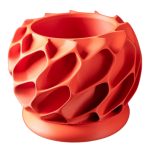
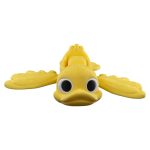
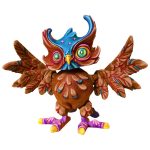
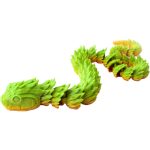
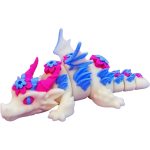
In the landscape of 3D printable design, few names carry as much recognition as Cinderwing3D. Their articulated dragon models have become defining objects of the entire desktop 3D printing community, combining aesthetic ambition with mechanical precision in a way that demonstrates what the medium can achieve when art and engineering converge. At 3DCentral, Cinderwing3D designs are among our most requested catalog items, and understanding the artistry and technical innovation behind their work reveals why these pieces resonate so deeply with collectors and 3D printing enthusiasts alike.
This is not simply a profile of a popular designer. It is an examination of how one artist’s approach to form, function, and manufacturability has influenced an entire category of 3D printed collectibles.
The Philosophy: Art That Moves
Cinderwing3D’s design philosophy rests on a principle that sounds simple but is extraordinarily difficult to execute: every piece must be both a beautiful sculpture and a functional mechanism. A Cinderwing3D dragon is not a static figurine with joints added as an afterthought. The articulation is integral to the design from the earliest concept stage. The way the dragon moves is as much a part of its artistic identity as the way it looks.
This dual focus on beauty and function distinguishes Cinderwing3D’s work from the majority of articulated designs in the 3D printing ecosystem. Many designers treat articulation as a technical challenge separate from aesthetic considerations, resulting in pieces that move well but look mechanical, or pieces that look beautiful but move stiffly. Cinderwing3D resolves this tension by designing joints that disappear into the sculpture. The transition between segments follows the natural lines of dragon anatomy, so the joints read as scales, ribs, or body contours rather than mechanical interfaces.
The practical result is a figurine that looks like a carved sculpture when still and transforms into a convincingly alive creature when picked up and posed. This transformation, from art object to interactive companion, is the core experience that has earned Cinderwing3D millions of downloads and a devoted following.
Signature Dragon Series: The Icons
The Crystal Dragon
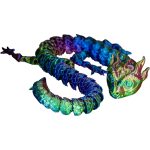
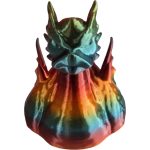
The crystal dragon is arguably the most recognizable single design in consumer 3D printing. Its faceted geometric surface transforms the traditional organic dragon form into something that appears cut from crystalline mineral. Each scale is a flat plane oriented at a precise angle, creating a surface that catches and reflects light differently with every slight rotation of the figurine.
The engineering of the crystal dragon is as impressive as its aesthetics. The faceted surface is not merely decorative. The flat planes actually improve print reliability by eliminating the curved overhangs that cause quality issues in organic surface designs. The geometric scales also provide visual camouflage for layer lines, since the deliberate faceting incorporates the horizontal print layers as part of the design rather than fighting against them.
When printed in translucent or silk filaments, the crystal dragon achieves effects that border on magical. Light passes through thin wall sections and reflects off internal surfaces, creating depth and luminosity that change with viewing angle. At 3DCentral, crystal dragons in silk rainbow and translucent filaments are perennial top sellers, and each color variant produces a distinctly different character from the same geometry.
The Bone Dragon
Where the crystal dragon celebrates light and geometric precision, the bone dragon inhabits the opposite aesthetic territory: darkness, organic decay, and ancient power. The bone dragon’s surface features skeletal textures, exposed rib structures, weathered surfaces, and hollow eye sockets that create a sense of age and menace.
The articulation design in the bone dragon serves its aesthetic differently than in the crystal variant. The joints are deliberately visible, exposed like the ball-and-socket joints of a skeletal system. This design decision turns the mechanical reality of print-in-place articulation into a thematic element. The dragon moves the way a skeleton moves, with visible joints and interconnected bone-like segments.
The bone dragon’s wings feature membrane details perforated with holes and tears, suggesting a creature that has endured centuries of existence. These thin-walled sections are printing challenges that Cinderwing3D handles through careful wall thickness management and strategic geometry that supports the delicate areas during the printing process.
The Rose Dragon
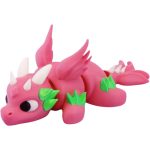
The rose dragon demonstrates Cinderwing3D’s range by applying their articulation expertise to an entirely different aesthetic register. Instead of scales or bones, the rose dragon’s body is composed of overlapping petal-like segments that evoke a dragon formed from blooming flowers.
This variant appeals to collectors who appreciate the engineering of articulated prints but prefer softer, more organic aesthetics over the fantasy aggression of traditional dragon designs. The rose dragon in pink or gradient pastel filaments occupies a distinct display niche, bringing grace and natural beauty to collections otherwise dominated by harder-edged designs.
Print-in-Place Engineering: The Technical Achievement
The defining technical innovation of Cinderwing3D’s work is the print-in-place joint system. Every moving part of every design prints as a single continuous piece on the build plate. There are no separate components to assemble, no glue, no screws, no pins. The dragon emerges from the printer as one object, and a gentle flex of the body separates the fused joints into independently moving segments.
Understanding how this works reveals the depth of engineering involved. During printing, adjacent segments are connected by thin bridges of material at the joint interfaces. These bridges are strong enough to hold the segments together during the printing process but weak enough to break cleanly when the finished piece is flexed. The gap between segments, typically a fraction of a millimeter, is precisely calibrated for the thermal behavior of PLA during cooling.
This calibration is the critical engineering challenge. If the gap is too small, the segments fuse permanently and the joints will not separate without damage. If the gap is too large, the joints feel loose and floppy, unable to hold poses. Cinderwing3D has refined these tolerances over years of iteration, testing across dozens of printer models and slicer configurations to find values that work reliably for the broad range of equipment used by the community.
At our Laval facility, our calibrated fleet produces Cinderwing3D designs with exceptional consistency because our machines are maintained at the precise tolerances these designs demand. The joint action on production prints from our 200+ printer fleet is smooth and reliable, reflecting the quality advantage of industrial-scale production.
Impact on the 3D Printing Community
Cinderwing3D’s influence extends far beyond their own design catalog. Their work has essentially defined a genre. Before their articulated dragons gained widespread popularity, print-in-place designs were a niche curiosity within the maker community. Cinderwing3D demonstrated that articulated prints could be beautiful, reliable, and enormously popular, inspiring an entire generation of designers to explore the format.
The open sharing of design principles has been a significant part of this influence. By discussing tolerance values, joint geometries, and design approaches publicly, Cinderwing3D has elevated the technical capabilities of the broader community. New designers entering the articulated print space build on foundations that Cinderwing3D helped establish.
This community elevation benefits everyone, including 3DCentral. The growing sophistication of articulated design means our catalog receives increasingly impressive submissions from emerging artists who have learned from Cinderwing3D’s pioneering work.
Cinderwing3D at 3DCentral
Our catalog features select Cinderwing3D designs produced at production quality on our calibrated fleet. Each piece is quality-inspected to ensure that joint action is smooth, surface finish meets standards, and the design matches the visual promise of the creator’s original vision.
Collectors can find Cinderwing3D dragons and other articulated designs in the 3DCentral shop. These pieces are available both through our direct website and on Amazon Canada, giving collectors flexible purchasing options.
For print farm operators who want to produce Cinderwing3D designs for their own sales channels, the Commercial License provides access to the STL library. This license grants the legal right to print and sell these popular designs, backed by a subscription model that supports the artists whose creativity drives the catalog.
To learn more about 3DCentral’s approach to design and production, visit our About page or explore more artist features and design process insights on our blog.
Frequently Asked Questions
Q: Do Cinderwing3D designs require supports when printing? A: Cinderwing3D’s designs are engineered for supportless printing. The geometry is designed so that all overhangs stay within printable angles, and the print-in-place joints are oriented to build cleanly without support material. This is a key part of their design philosophy: the print should work reliably without requiring users to make complex slicer decisions.
Q: What filament colors work best for Cinderwing3D dragons? A: Silk and metallic filaments produce particularly stunning results on crystal dragon variants because the faceted surfaces catch and reflect the filament’s luster at different angles. Translucent filaments create depth effects as light passes through thin wall sections. Matte filaments work well for bone dragon variants where you want to emphasize texture over reflectivity. At 3DCentral, we offer Cinderwing3D designs in a curated range of colors selected to maximize each variant’s visual impact.
Q: How do I maintain the joint action on an articulated dragon over time? A: Articulated joints require minimal maintenance. If joints feel stiff after extended display in one position, gently flex the body through its full range of motion to restore smooth action. Avoid forcing joints past their designed range, which can cause breakage. Keep pieces away from heat sources, as PLA can soften at high temperatures and affect joint tolerances. Store articulated pieces in neutral, relaxed poses to avoid joint stress during storage.