Articulated dragons represent the absolute pinnacle of print-in-place engineering in consumer 3D printing. A single model containing 30 to 50 independently moving joints, wing mechanisms that fold and extend, jaw hinges that open and close, and tail segments that flex into dramatic poses, all emerging from the print bed fully assembled with zero post-processing. No glue. No screws. No snap-fit assembly. Just engineering precision translated into polymer.
At 3DCentral, our articulated dragon line is consistently among our most popular product categories. These are not simple figurines that sit motionless on a shelf. They are interactive engineering showcases that invite handling, posing, and continuous repositioning. Here is a deep look at what makes them possible, why they captivate collectors, and how our Quebec print farm produces them at scale.
The Engineering Behind Print-in-Place Articulation
Print-in-place articulation relies on a fundamental principle: designing joints with precise clearance gaps that prevent layers from fusing during the printing process while remaining tight enough to hold poses after completion. This sounds straightforward in theory. In practice, it requires exacting tolerances measured in fractions of a millimeter.
Joint Design and Clearance Tolerances
Each joint in an articulated dragon consists of a ball-and-socket or pin-and-hinge mechanism where two surfaces print in close proximity without bonding together. The critical clearance, typically between 0.3mm and 0.5mm depending on the printer and material, must account for thermal expansion during printing, slight oozing of molten filament, and the natural variation that occurs across a multi-hour print.
Too tight, and the joints fuse permanently. Too loose, and the dragon flops limply, unable to hold any pose. The designers who create these models spend weeks calibrating tolerances across every joint, because a clearance that works perfectly for a tail segment may fail at a wing hinge where forces and geometries differ.
Spine, Tail, and Wing Mechanisms
The spine is the dragon’s structural backbone, literally. It consists of interlocking vertebrae-like segments that allow smooth S-curve posing. Each segment nests into the next with enough freedom to rotate but enough friction to hold position. A typical dragon spine contains 12 to 20 individual segments.
The tail extends this principle further, often with gradually decreasing segment sizes toward the tip. This tapering creates a natural, organic flex pattern that mimics how a real reptilian tail would move, wide sweeping curves near the base transitioning to tight curls at the tip.
Wing mechanisms are the most complex subsystems. A folding wing requires a primary hinge joint at the shoulder, secondary joints along the wing spar, and membrane sections that flex rather than articulate. Larger dragon models may include three or four independent wing joints per side, allowing displays ranging from fully folded against the body to dramatically spread.
Size, Presence, and Display Impact
Articulated dragons range from compact 6-inch models to commanding 14-inch display pieces. Size directly impacts both the quality of articulation and the visual impact of the finished piece.
Why Larger Models Articulate Better
Larger dragons allow for wider clearance gaps without compromising joint tightness. A 0.4mm gap on a 14-inch dragon creates smooth, satisfying movement. The same gap scaled down to a 6-inch model can feel loose. Larger models also resolve surface detail more clearly, meaning scale textures, claw details, and facial features are sharper and more defined.
The biggest models make genuinely commanding display pieces. A 14-inch articulated dragon posed in a striking position on a bookshelf or desk creates a focal point that draws attention from across a room. The ability to repose these dragons means the display never becomes stale. Collectors regularly rearrange their dragons to create new visual narratives.
Materials That Bring Dragons to Life
Material selection dramatically affects the look and feel of an articulated dragon. At 3DCentral, we produce dragons in several material and color combinations, each creating a distinctly different character.
Metallic Silk PLA
Silk PLA in gold, copper, bronze, or red produces the most dramatic dragon aesthetic. The metallic sheen catches light across scale textures, creating a visual effect that closely resembles cast metal. Gold silk dragons in particular have a treasure-hoard quality that is deeply satisfying.
Multi-Color Filament
Multi-color filaments create natural-looking scale variation across the dragon’s body. As the filament transitions between colors during the print, different body sections take on different hues. This randomized coloring mimics the way natural reptile scales vary in pigmentation, producing a uniquely organic appearance that single-color prints cannot achieve.
PETG for Durability
Collectors who actively handle and repose their dragons frequently may prefer PETG versions. PETG offers greater impact resistance and flexibility compared to PLA, meaning joints are less likely to snap under repeated posing. The trade-off is a slightly less detailed surface finish, but for interactive display pieces, durability often outweighs surface perfection.
Community Artists and Design Variety
Our dragon line features designs from multiple community artists, each bringing a unique interpretation of dragon anatomy and articulation philosophy. This variety means our figurines collection includes dragons with vastly different personalities.
Some artists favor Western dragon proportions: heavy bodies, broad wings, thick tails. Others draw from Eastern dragon traditions: elongated serpentine bodies, smaller or absent wings, flowing whisker details. Still others create entirely original dragon species that blend multiple influences into something new.
This diversity of artistic vision is one of the strengths of 3DCentral’s model. By curating designs from artists like Cinderwing3D, Flexi Factory, and other talented creators, we offer a dragon collection with genuine variety rather than variations on a single template.
Printing Articulated Dragons at Scale
Producing articulated dragons on a 200+ printer farm presents unique challenges compared to static figurines. These are among the most demanding prints in our catalog, requiring careful temperature management, precise first-layer calibration, and extended print times.
Production Challenges
A large articulated dragon can require 8 to 16 hours of continuous printing. During that time, ambient temperature fluctuations, minor vibrations, or filament inconsistencies can compromise joint clearances. Our facility maintains controlled environmental conditions to minimize these variables, and each printer is calibrated specifically for the articulated models it produces.
Failed prints are more costly with articulated dragons because the failure typically is not apparent until the print is complete and the joints are tested. A fused joint discovered at hour 14 means the entire print is scrapped. This is why quality control is particularly rigorous for this product category, and why achieving consistent output across hundreds of units requires the kind of infrastructure and expertise that defines an industrial print farm.
Collecting Articulated Dragons: Building a Display
Dragon collectors tend to be among the most dedicated enthusiasts in the 3D printing collectibles space. Many build themed displays that evolve over time, adding new pieces as they discover artists and colorways they had not previously considered.
Display Tips for Articulated Pieces
Position articulated dragons on surfaces where they can be posed dynamically. Shelf edges work well because the tail can drape over the edge, creating a sense of movement and depth. Pair dragons of different sizes to create a parent-and-offspring narrative, or arrange multiple dragons in a circular formation as if in council.
Lighting matters significantly for metallic silk PLA dragons. A small LED spotlight angled from above and slightly to one side creates dramatic shadows in the scale textures and makes the metallic sheen shift as the viewer moves around the piece.
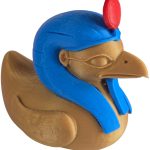
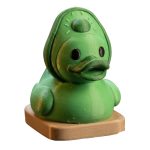
For those looking to expand beyond dragons, articulated figurines pair well with static fantasy pieces. A Wizard Duck from our ducks collection posed beside an articulated dragon creates an immediate narrative moment on any shelf.
Commercial Potential for Print Farm Operators
Articulated dragons are among the highest-demand items in the 3D printing collectibles market. For print farm operators working under a Commercial License, dragons offer strong per-unit margins and high customer satisfaction rates. The interactive nature of articulated pieces generates organic social media exposure as buyers share videos of their dragons being posed, creating word-of-mouth marketing that static figurines rarely achieve.
Frequently Asked Questions
Q: Do articulated dragons require assembly after printing? A: No. Articulated dragons are engineered as print-in-place designs, meaning they emerge from the printer fully assembled with all joints moving freely. No glue, screws, or snap-fit assembly is required.
Q: How many moving joints does a typical articulated dragon have? A: A fully articulated dragon typically features between 30 and 50 independent joints, including spine segments, tail sections, wing hinges, leg articulation, and a jaw mechanism. Larger models tend to have more joints for smoother, more expressive posing.
Q: Are articulated dragons fragile? A: Standard PLA articulated dragons are durable under normal handling but should be posed gently to avoid snapping thin joint connections. For collectors who want maximum durability for frequent posing, PETG versions offer greater flexibility and impact resistance.