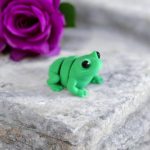
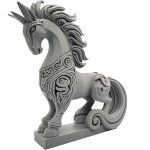
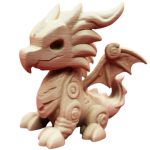
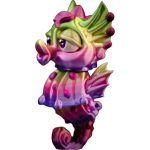
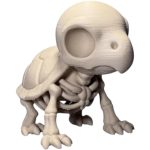
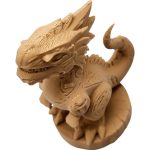
Busts and sculptures occupy a particular place in decorative art — they carry the weight of thousands of years of tradition while remaining immediately recognizable as objects of beauty and status. 3D printing has democratized access to sculptural art that previously required either expensive foundry work, skilled hand-carving, or mass-produced resin casting with limited customization.
Today, a collector can own a detailed sculptural bust for a fraction of what traditional manufacturing demands. At 3DCentral, our Quebec print farm produces sculptures with layer resolutions fine enough to capture facial expressions, flowing hair, and draped fabric with museum-level fidelity.
Scale and Presence: Choosing the Right Size
The size of a bust determines where it fits in your space and how much visual authority it carries. Understanding scale helps you select pieces that work with your existing decor rather than against it.
Desktop Scale (8-15 cm)
Small busts function as sophisticated desk accessories and bookshelf anchors. At this scale, they complement rather than dominate their surroundings. A pair of matching busts serves as elegant bookends. A single piece on a desk adds personality without consuming workspace.
Statement Scale (15-25 cm)
Mid-range busts become focal points on console tables, mantles, and display shelves. This is the most popular size category for home collectors because the pieces are large enough to showcase detail while remaining manageable in standard living spaces.
Gallery Scale (25-40 cm)
Large-format busts demand dedicated display space — a pedestal, a deep shelf, or a niche. They read as serious art pieces and benefit from intentional lighting. Print time at this scale can reach 48 hours or more, which directly influences pricing and availability.
Artist Collaborations and Design Sources
The strongest sculptural designs in 3D printing come from artists with traditional sculpting backgrounds who have adapted their skills to digital workflows. These designers understand anatomy, proportion, and expression in ways that pure digital artists sometimes miss.
Community Artist Models
3DCentral’s catalog features works from talented community artists including McGybeer, Cinderwing3D, and Zou3D, whose designs range from realistic portrait busts to stylized character sculptures. Each artist brings a distinct aesthetic, giving collectors genuine variety.
Classical Reimaginations
Some of the most compelling 3D printed busts reinterpret classical subjects — Greek philosophers, Roman emperors, Renaissance figures — with modern design sensibilities. A Socrates bust with geometric fragmentation. A Caesar rendered in wireframe. These pieces spark conversation by bridging historical art with contemporary manufacturing.
Printing Challenges: Why Busts Test a Print Farm
Sculptural busts push 3D printing technology to its limits. Understanding these challenges helps collectors appreciate the craftsmanship behind each piece.
Support Structures
Busts feature significant overhangs — chins, noses, outstretched hands, flowing hair. These overhangs require support material during printing, and removing that support without damaging surface detail demands skilled post-processing. At our Quebec facility, trained technicians handle support removal with precision tools to preserve every sculpted detail.
Print Orientation
The orientation of a bust on the print bed affects surface quality, layer line visibility, and structural integrity. Printing a bust upright puts layer lines horizontally across the face, which can emphasize features in an unflattering way. Experienced print farms like 3DCentral optimize orientation for each model, sometimes printing at angles that minimize visible layering on critical surfaces.
Extended Print Times
A 20 cm bust at 0.12 mm layer height can take 18-36 hours to complete. Larger pieces at finer resolutions easily exceed 48 hours. These long print times require stable, well-maintained equipment and carefully calibrated settings — a mid-print failure on a 30-hour job wastes significant material and time.
Material Selection for Sculptural Impact
Matte PLA: The Stone Effect
Matte PLA in white, ivory, or grey creates the most convincing stone-like appearance. The absence of sheen lets the sculptural form and lighting do the work, producing results that photograph remarkably close to plaster or marble.
Marble-Effect Filament
Specialty marble PLA contains colored streaks that mimic natural stone veining. The effect varies slightly with each print, making every bust unique. This material works exceptionally well for classical subjects.
Bronze and Copper Fill
Metal-infused PLA filaments contain actual metal powder (typically 30-50% by weight). After printing, these pieces can be sanded and polished to develop a genuine metallic surface. Over time, copper-fill pieces develop natural patina. These materials produce the most convincing “traditional sculpture” appearance but require additional post-processing.
Resin Comparison
While our farm focuses on FDM printing with PLA, resin-printed busts offer even finer surface detail at smaller scales. The tradeoff is material brittleness and UV sensitivity. For pieces above 15 cm, FDM with fine layer height provides the best balance of detail, durability, and value.
Display and Lighting for Maximum Impact
How you display a bust matters as much as the piece itself. Museum and gallery principles apply directly.
Pedestal Display
A simple pedestal (even a painted wooden block) elevates a bust literally and visually. Raising the piece to eye level or slightly above creates a natural viewing experience and adds gravitas.
Directional Lighting
A single directional light source creates the dramatic shadows that make sculptural detail come alive. Position a spotlight or desk lamp at roughly 45 degrees from above and to one side. The resulting interplay of light and shadow across facial features produces the most compelling visual effect.
LED accent lighting from below produces an upward-shadow effect that adds drama but can feel theatrical. Use this approach selectively for pieces intended to create bold visual statements.
Background Selection
Place busts against plain, contrasting backgrounds. A white bust against a dark wall. A dark bust against a light surface. Busy backgrounds compete with sculptural detail and diminish the piece’s impact.
For more display and styling approaches, explore our guide on elegant and sophisticated 3D printed decor.
Building a Sculpture Collection
Start with a single piece in a style that resonates — classical, modern, character-based, or abstract. Live with it for a few weeks before adding more. Sculptural pieces carry significant visual weight, and a curated collection of three to five strong pieces will always outperform a crowded shelf of mediocre ones.
Consider mixing scales within your collection: a large statement bust flanked by two smaller companion pieces creates a natural hierarchy. Browse our full shop to see the range of sculptural options available.
Frequently Asked Questions
How detailed are 3D printed busts compared to resin or plaster casts? At 0.12 mm layer height, FDM-printed busts capture fine facial detail including individual eyelashes, hair strands, and fabric folds. While resin casting offers slightly smoother surfaces, PLA busts at premium resolution are remarkably detailed and significantly more affordable.
Can I paint a 3D printed bust to look like bronze or marble? Yes. Acrylic paint with a primer base adheres well to PLA. For bronze effects, apply a dark base coat followed by dry-brushing with metallic gold or copper acrylic. For marble, use a white base with thin veins of grey applied with a fine liner brush. Seal with matte clear coat.
How heavy are 3D printed busts? A 20 cm PLA bust with standard infill (15-20%) weighs approximately 200-400 grams, significantly lighter than equivalent plaster or resin pieces. This lighter weight makes shelf display easier but can make pieces feel less substantial. Higher infill percentages add weight and solidity.
Will layer lines be visible on my bust? At standard 0.2 mm resolution, layer lines are visible from close inspection distance (under 30 cm). At 0.12 mm resolution, lines become difficult to see at normal viewing distance. Post-processing with fine sandpaper (400-600 grit) and primer can eliminate visible lines entirely for a perfectly smooth finish.
What is the best room temperature for displaying PLA sculptures? PLA maintains its shape at normal room temperatures up to about 50-55 degrees Celsius. Avoid placing pieces near heat sources, radiators, or in direct sunlight through south-facing windows. Standard indoor environments (18-25 degrees Celsius) are perfectly safe for long-term PLA display.